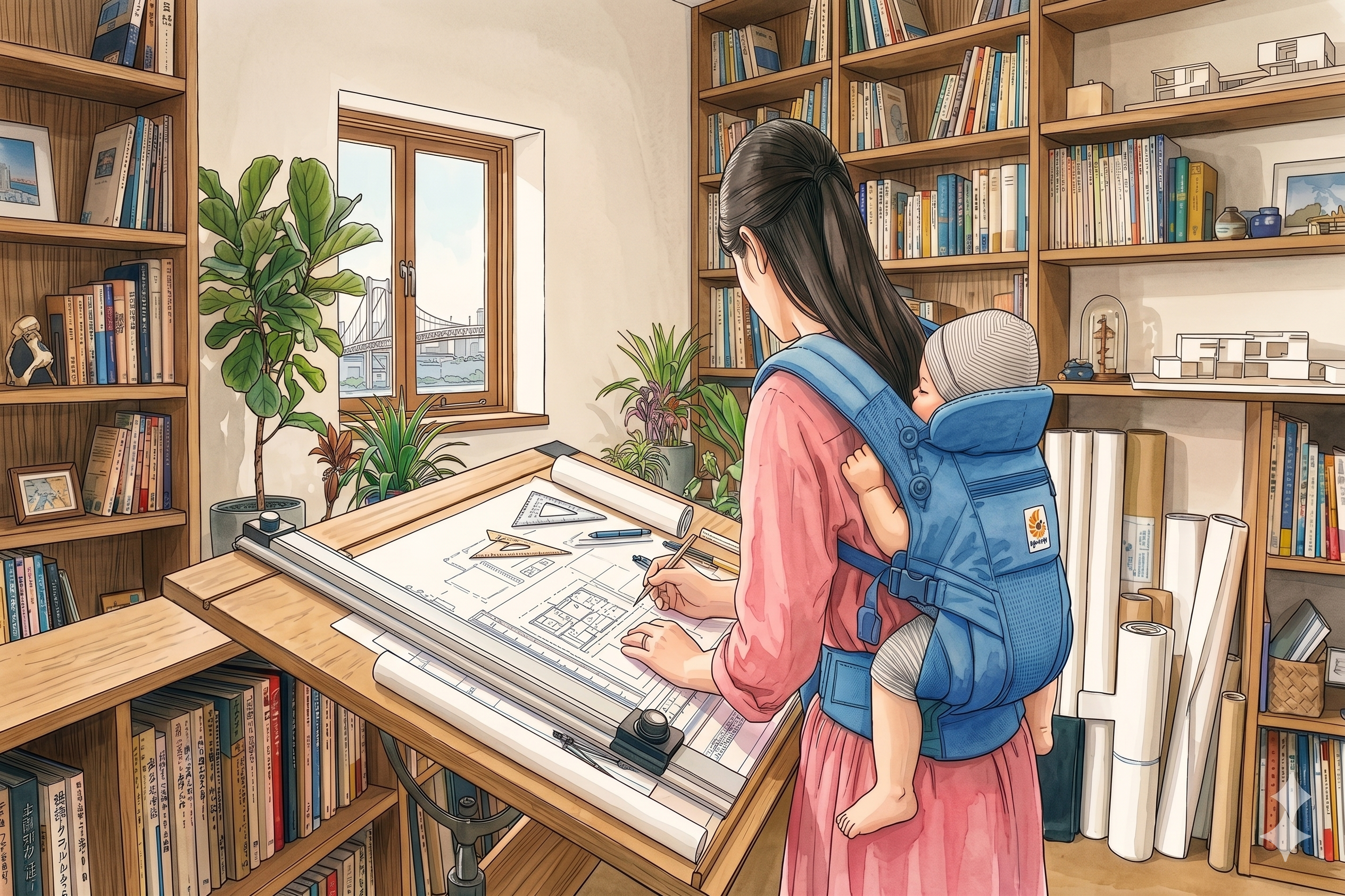


Hello, everyone! I am Ai Okazaki, a first-class registered architect, real estate agent, and condominium maintenance and repair engineer.
Recently on my Ameba blog, I shared a snippet about our family vacation to Bali during the latter half of our summer break.
As an architect, experiencing the resort’s open spaces—where nature and refreshing breezes seamlessly intertwine—alongside the beautiful use of natural materials was incredibly inspiring.
During our stay, we had the opportunity to visit The Ritz-Carlton Bali for lunch.
While it was just a brief visit for a meal rather than an overnight stay, I decided to drop by “Ritz Kids,” the resort’s kids’ club where my children used to spend so much time.
To my absolute amazement, even though seven full years had passed, the staff members perfectly remembered our family and our past visits.
It brought back such fond, heartwarming memories of celebrating my eldest daughter’s 5th and 6th birthdays there.
Seeing them genuinely moved by how much my children had grown made us feel incredibly welcomed, making it a truly cherished highlight of our trip.
Walking through the property afterward, I noticed that no matter where I looked, the breathtaking gardens were meticulously maintained.
Bali’s intense tropical sun, salty ocean breezes, and sudden squalls create an incredibly harsh environment for both buildings and vegetation.
The reason everything remains pristine is entirely due to the continuous, dedicated care provided daily by the staff behind the scenes.
Experiencing this flawless upkeep alongside such warm, personalized service made me realize how deeply this mirrors the property management of the apartments we live in.
Even structures that appear completely sturdy and unchanging are, in reality, experiencing gradual wear and tear every day.
This core philosophy of “how to maintain a building to protect its long-term value” connects directly to the tower condominiums we live in across the Minato Ward and Tokyo waterfront areas.
As a high-rise building approaches the 10-to-15-year mark, it inevitably faces its first major renovation project. Depending on the scale of the building, these undertakings can easily become massive operations reaching 1 billion to 1.5 billion yen. Drawing from my professional background as a condo maintenance specialist, let’s explore some of the unique characteristics and hurdles of high-rise renovations in a clear, easy-to-understand way!
1. Setting Up Scaffolding is Impossible?! Specialized High-Rise Construction Methods
For standard residential buildings, workers typically erect metal pipe scaffolding around the exterior and cover it with mesh sheets. However, for a tower condo soaring 30 or 40 stories high, assembling scaffolding from the ground up is physically impossible. Instead, highly specialized methods must be utilized:
- Gondola Method: Specialized work platforms are suspended from the roof using steel cables, allowing workers to repair and paint the exterior walls as they descend. Because these are highly susceptible to high winds, operations are frequently paused on windy days for safety.
- Lift-Climbing Scaffolding: Temporary work platforms that mechanically climb up and down along the sides of the building.
The upper levels of a high-rise face significantly stronger wind pressures, intense UV radiation, and structural shifting compared to lower buildings.
Consequently, the project requires premium, highly durable materials for exterior paints and joint sealants.
Managing safety and scheduling in such an elevated environment requires a high level of technical expertise, meaning only a limited number of specialized contractors can execute the work.
2. The Financial Barrier: Soaring Costs and the “Blind Spot” of Minato Ward
Major renovations for tower condos break down to higher expenses per unit than standard apartments.
This is driven by the setup costs of specialized high-rise machinery, faster deterioration from severe weather and coastal air, and the wide array of shared amenities requiring updates—such as sky lounges, interior hallways, multiple elevators, and central disaster prevention systems.
Furthermore, living in an premium area like Minato Ward introduces distinct, often overlooked logistics costs.During a major renovation, a continuous stream of material delivery trucks and workers’ vehicles must commute to the site daily. However, tower condo properties rarely have enough internal space to accommodate all these construction vehicles, making it necessary to lease nearby commercial parking spaces.
Given the high real estate values in Minato Ward, local parking rates are notoriously expensive.
Factoring in multiple parking spaces over a construction period spanning several months to over a year—alongside the specialized transport and security coordination required for navigating central Tokyo’s strict traffic regulations—these logistical vehicle expenses alone can easily add millions or even tens of millions of yen to the final bill. Combined with recent inflation and rising material costs, the industry benchmark is steadily climbing.
3. The Impact on Your Views and Daily RoutineBecause these large-scale projects can take anywhere from a year to nearly two years to complete, they naturally bring temporary changes to the residents’ daily lives:
- Balcony Restrictions: During periods of exterior wall repairs or painting, residents cannot hang laundry outside or store items on their balconies.
- Privacy and Views: Since workers will be operating gondolas right outside the windows, residents need to keep their curtains drawn during daytime working hours. It requires some adjustment to temporarily lose that signature high-rise sense of openness where you can leave your curtains wide open to enjoy the skyline.
Real-World Data: Repair Reserves in the Shibaura AreaTo see how this plays out in reality, let’s look at the actual track records of prominent tower condos in the Shibaura and Tamachi areas.
Currently, Capital Mark Tower is right in the middle of its major renovation project.
Meanwhile, Global Front Tower has completed its roof waterproofing and is preparing for its main exterior overhaul in the near future.
Looking at Shibaura Island’s Grove Tower and Cape Tower—both of which have fully completed their renovation cycles—the total cost broke down to roughly 1.2 million to 1.5 million yen per unit.
While the historical industry benchmark for standard properties is often cited as 1 million yen per unit, the current economic climate has naturally pushed these averages upward.
Crucially, a review of the financial statements for both Shibaura Island properties reveals that even after executing such massive financial undertakings, they have managed to retain highly robust repair reserve funds for the future.
Successfully completing the construction is vital, but the foresight to maintain a significant financial cushion afterward is what truly delivers long-term peace of mind for the residents.
An Architect & Agent’s Advice: Always Review the Repair History and Long-Term Maintenance Plans Before Buying!
When looking at tower condos, it is easy to be captivated by beautiful interior finishes, breathtaking views, and glamorous amenities. However, as professionals, the very first things we verify are the building’s historical repair records and its future Long-Term Maintenance Plan.
- Have past maintenance tasks been executed at the proper intervals?
- What is the current health of the repair reserve fund? Are there any deficits or unpaid dues?
- Is the homeowners’ association actively building consensus for the next major renovation?
In condominiums with a high percentage of investment-property owners, there is sometimes a tendency to defer these capital-intensive renovations to avoid short-term expenses.
However, neglecting these updates inevitably compromises the long-term value of the entire property.
Just as Bali’s luxury resorts rely on continuous care to grow more beautiful and prestigious over time, a Japanese tower condo’s true intrinsic value—and its strength when you eventually decide to sell—is determined by whether its physical structure (hardware) and management framework (software) are properly maintained.A major renovation cycle every 10 to 15 years is undoubtedly a significant financial commitment.
Yet, when viewed as a proactive investment in nurturing our homes for the future, it allows us to see their true worth in a completely different light.
If you are wondering about the management health or future renovation risks of a specific tower condo in the Shibaura or broader Minato Ward area, I am here to provide a multi-layered analysis from the combined perspective of an architect, agent, and repair specialist.
Please feel free to reach out anytime!
#MinatoCity #Shibaura #TokyoRealEstate #TowerCondo #TokyoProperty #ArchitectInTokyo #RealEstateAgent #PropertyInvestment #TokyoLiving #TowerCondoRenovation
コメントを残す